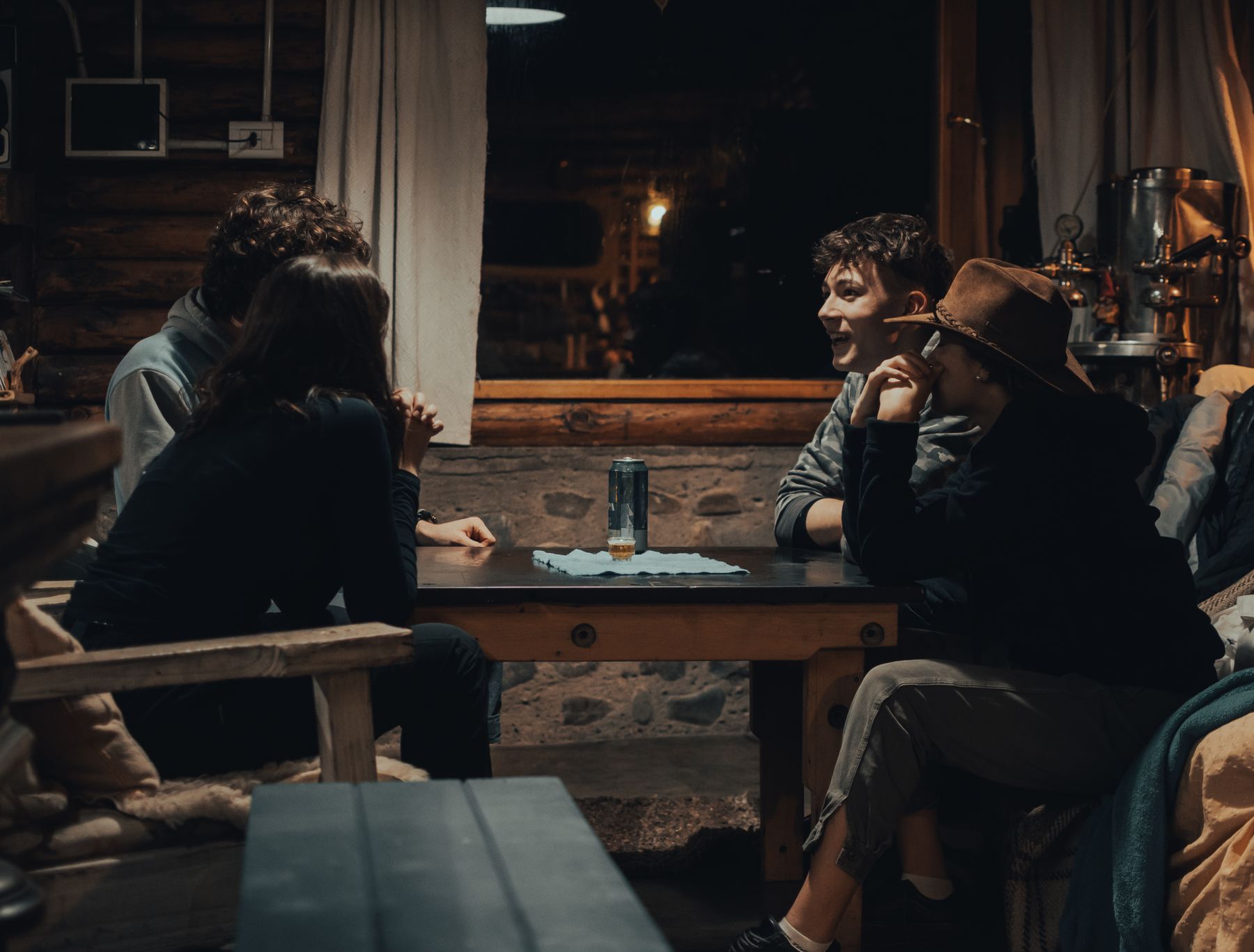
A simplicity circle is a small group — usually six to twelve people — that meets regularly to talk honestly about living more simply: money, possessions, time, work and community. It has no leader or expert; members take turns facilitating, listen to one another and support each other’s changes.
Origin: Cecile Andrews, Seattle, early 1990s; described in her book The Circle of Simplicity (1997). Format: 6–12 people, weekly or fortnightly, 90 minutes to 2 hours, a theme and questions each time. Free, peer-led, no expert. Our six-week course gives a ready-made structure.
Where simplicity circles come from
The format was developed by American educator Cecile Andrews, who began running small discussion groups on voluntary simplicity in Seattle in the early 1990s. Inspired by study circles — a tradition of adult education strong in Sweden — the groups spread across North America and beyond. Andrews described the method in The Circle of Simplicity: Return to the Good Life (1997). The idea was simple: changing one’s life against the current of consumer culture is much easier with company.
Why a circle helps
- Support: friends, family and advertising often push the other way; a circle pushes with you.
- Accountability: saying aloud what you intend to change makes it more likely you will.
- Ideas: members share practical solutions that no book contains.
- Community: many circles become lasting friendships, which is itself a form of richness.
How a session works
| Time | Part of the session | What happens |
|---|---|---|
| 10 min | Arrival and check-in | Each person says briefly how they are and what changed since last time |
| 10 min | Reading | A short text on the theme, read aloud or prepared in advance |
| 50–60 min | Conversation | Two or three open questions, everyone speaks in turn before open discussion |
| 15 min | Practical commitment | Each person names one small action for the coming week |
| 5 min | Close | Choose next facilitator and theme |
Ground rules that keep circles healthy
- Speak from your own experience; no lecturing or advice unless asked.
- Listen without interrupting; give everyone time to speak.
- What is said in the circle stays in the circle.
- No selling, recruiting or promoting products or causes.
- Rotate facilitation so no one becomes the “leader”.
How to start a simplicity circle
- Find three or four people — friends, neighbours, colleagues, a faith community or a local notice board.
- Choose a place — a living room, library room or café back room. Homes work well.
- Agree a rhythm — weekly for six weeks is a good first commitment.
- Pick themes — enough, things, money, time, earth, community. Our six-week course provides readings and questions.
- Hold the first meeting — explain the format, agree the ground rules and start.
- Review after six weeks — decide whether to continue, change themes or welcome new members.
Themes and questions to get started
| Theme | Example questions |
|---|---|
| Enough | When did you last feel you had enough? What made it so? |
| Things | Which object would you save in a fire? Which would you not miss? |
| Money | What do you spend on that does not reflect your values? |
| Time | If you had one more free day a week, how would you use it? |
| Earth | Which of your habits would you most like to change for the planet? |
| Together | Who in your life supports a simpler way of living? |
Frequently asked questions
What is a simplicity circle?
A small, peer-led group of six to twelve people who meet regularly to talk about living more simply and support each other’s changes.
Who started simplicity circles?
Educator Cecile Andrews, in Seattle in the early 1990s. She described the method in The Circle of Simplicity (1997).
Do I need an expert to run a circle?
No. Circles are peer-led; members take turns facilitating with a theme and a few questions.
How often do simplicity circles meet?
Usually weekly or fortnightly, for 90 minutes to two hours. Six sessions is a good first commitment.
Can a simplicity circle meet online?
Yes, although many people find in-person meetings build stronger trust and friendship.