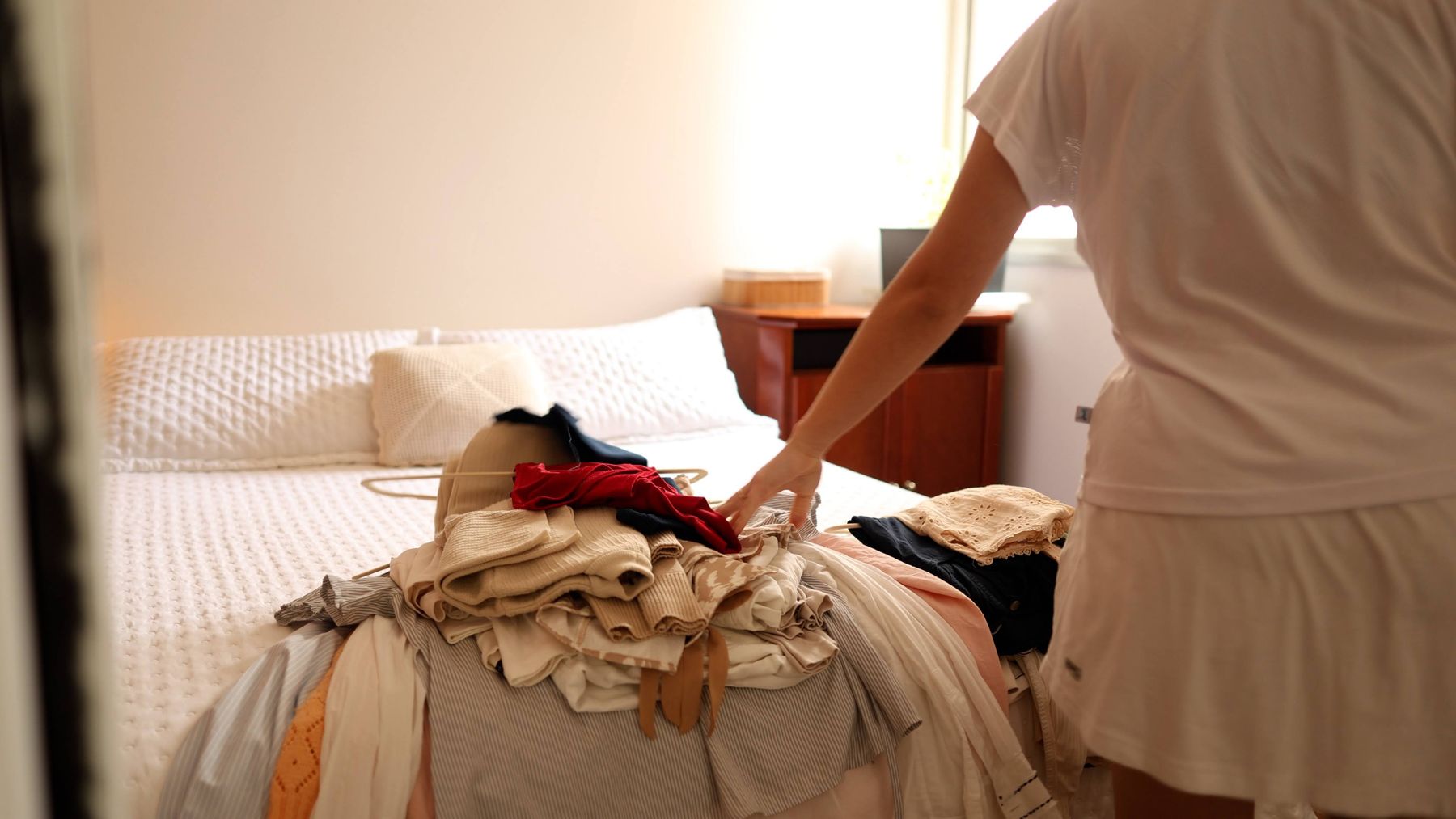
Decluttering is the process of removing the possessions you no longer use, need or love, so that your home is easier to live in and to care for. The most reliable approach is to work by category, starting with the easiest items, deciding quickly, and dealing with what leaves the house the same week.
Start easy: clothes, books, kitchen duplicates — not photos or heirlooms. Choose a method: by category (KonMari), room by room, the 30-day game or Swedish death cleaning. Three piles: keep, donate or sell, recycle. Take things out of the house within a week. Prevent relapse with a one-in, one-out rule.
Before you start
Decluttering is easier when you know why you are doing it. Picture how you want a room to feel and work — a kitchen where you can cook without moving things, a bedroom with clear surfaces — and keep that picture in mind when deciding. Plan where things will go: a local charity shop, a resale site, recycling points. Clutter that sits in bags in the hallway for months is just clutter in a new place.
The main decluttering methods
| Method | How it works | Best for |
|---|---|---|
| KonMari (Marie Kondo) | Work by category, not room, in a fixed order: clothes, books, papers, miscellaneous, sentimental. Keep what “sparks joy”. | A one-time, thorough reset |
| Room by room | Finish one room before moving to the next, often starting with the most used. | Busy people who want visible progress |
| 30-day minimalism game | Remove one item on day 1, two on day 2, and so on — about 465 items in a month. | Building momentum with a playful challenge |
| Swedish death cleaning (döstädning) | Sort your belongings so that others will not have to after you; popularised by Margareta Magnusson. | Downsizing, later life, sentimental items |
| Four-box method | Keep, donate, sell, recycle — every item goes in a box, no “maybe” pile. | Quick decisions on large volumes |
Where to start: an order that works
- Clothes — decisions are quick and the result is visible.
- Books and media — keep what you will reread or consult.
- Kitchen — duplicates, unused gadgets, expired food.
- Bathroom — samples, expired products, old medicines (return these to a pharmacy).
- Papers — keep what you are legally required to; scan or shred the rest.
- Garage, loft and storage — often the largest volume, but low emotional weight.
- Sentimental items last — by then your decision-making “muscle” is stronger.
Questions that make decisions easier
- Have I used this in the past year?
- If I lost it, would I buy it again?
- Do I keep it out of guilt, or because it was expensive?
- Does someone else need it more than I do?
- Is this the best one I have, or a duplicate?
Dealing with sentimental objects
Sentimental items are the hardest because they carry memories, not just function. A few approaches help: keep a small, chosen selection rather than everything; photograph objects before letting them go; give heirlooms to family members who will use them; and set a container limit (one box per person, for example). There is no obligation to part with what truly matters to you.
What to do with what leaves
Give usable items to charity shops, community groups or neighbours; sell valuable pieces through local or online resale; recycle electronics, textiles and batteries through proper channels. Try not to send usable things to landfill — decluttering is meant to reduce waste, not move it.
How to stop clutter coming back
- One in, one out: when something new arrives, something similar leaves.
- A waiting period before non-essential purchases.
- A home for everything: if an object has no place, question whether it should stay.
- A donation box kept permanently by the door, emptied monthly.
- Fewer inflows: unsubscribe from marketing emails and decline free promotional items.
Decluttering is often the first visible step of simple living. For the screen equivalent, see digital minimalism.
Frequently asked questions
Where should I start decluttering?
With an easy category such as clothes or books. Leave sentimental items and photos until last.
What is the KonMari method?
Marie Kondo’s method of tidying by category in a fixed order — clothes, books, papers, miscellaneous, sentimental — keeping only items that “spark joy”.
What is Swedish death cleaning?
Döstädning: sorting your belongings so that others will not have to after you die. It was popularised by Margareta Magnusson’s 2017 book.
How long does it take to declutter a house?
A thorough declutter often takes several weekends to a few months. Working one category at a time keeps it manageable.
How do I stop clutter coming back?
Use a one-in, one-out rule, wait before buying, give every object a home and keep a donation box by the door.